For years, “luxury” in homes often meant more.
More finishes.
More feature walls.
More textures, more lighting, more of everything.
But step into the best Australian homes today and you’ll feel something different. The spaces are calmer. The palettes are simpler. The details are sharper. Nothing is shouting, but everything feels considered.
The definition of luxury is shifting from “How much can we add?” to
“What really deserves to be here?”
And in that new picture, stone sits right at the centre.
From Quantity to Quality: Fewer, Better Decisions
The old approach to a “luxury” home might have meant:
A different benchtop in every zone
Feature tiles in every bathroom
Multiple competing focal points in one room
The new approach is quieter but more confident.
We’re seeing homeowners, architects and designers choose:
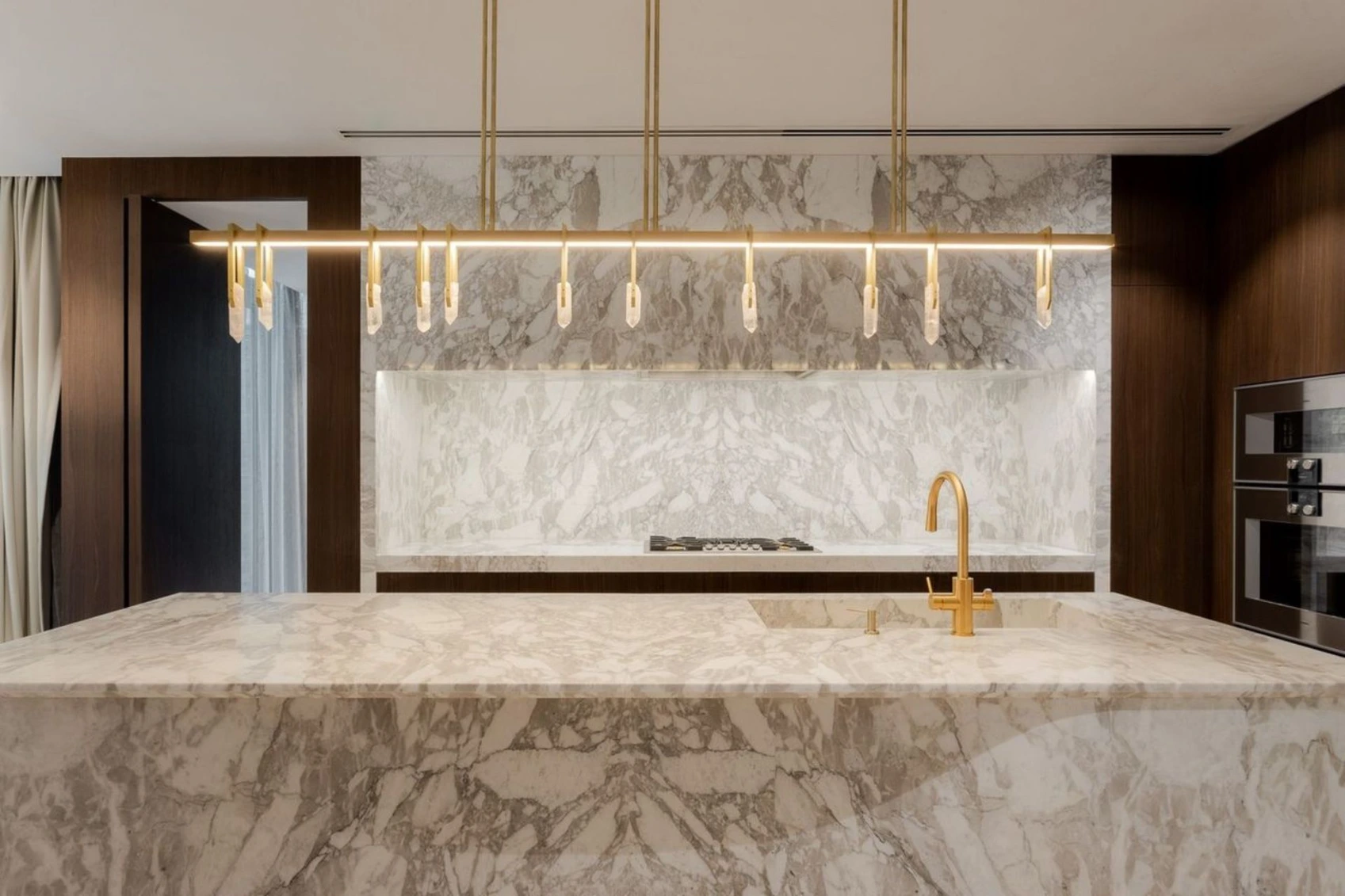
One hero island stone that anchors an entire open-plan living space
A single bookmatched wall instead of three or four smaller “accent” treatments
A calm, continuous flooring stone that runs through key zones and lets furniture and light do the talking
It’s not about spending less — it’s about spending more intentionally.
Luxury becomes:
“I’d rather have one stunning, well-detailed stone moment that I love every day
than ten things I notice once and then forget.”
Tactility Over Trends
Scroll through social media and it’s easy to think luxury is all about the shot: the angle, the styling, the perfect vignette.
But when you actually live in a space, something else matters more:
how it feels.
Stone leads that conversation in a few ways:
1. The way it feels under hand
Honed, leathered and softly textured finishes are increasingly replacing high-shine, mirror-polished surfaces in luxury homes. Clients are asking for stone that feels:
Soft rather than slippery
Natural rather than plasticky
Comfortable to lean on and touch every day
It’s the kind of surface you unconsciously run your hand over as you walk past the island or vanity.
2. The way it looks across the day
Good stone is never static. Its veining, movement and depth change with:
Morning light vs evening light
Direct sun vs moody artificial light
Reflections from timber, metal and fabrics around it
That subtle changeability is part of what separates “premium” from “generic”. It’s one of the reasons natural stone and well-chosen porcelain/sintered surfaces keep showing up in truly high-end projects.
3. The way it calms a room
A single, well-chosen stone can quietly tie together:
Joinery colours
Flooring tones
Tapware and hardware finishes
Instead of adding more and more design “moments”, one grounded stone decision can make the whole room feel resolved.
Stone as an Investment Piece, Not Just a Benchtop
In this new definition of luxury, key stone elements are treated less like “fixtures” and more like investment pieces.
Think of them in the same category as:
A well-made dining table
A favourite chair
A quality light fitting you plan to keep for decades
Some of the places we see this most clearly:
The Island as Anchor
In many Australian homes, the kitchen island isn’t just a work surface. It’s:
Breakfast bar
Homework desk
Party server
Daily gathering point
Choosing the right stone here turns it into the visual and emotional anchor of the whole open-plan space. It doesn’t need competing feature walls — it becomes the feature.
Vanities That Slow You Down
Bathrooms and powder rooms are where smaller pieces of stone can do big work:
A simple vanity slab with beautiful veining
A full-height splashback behind the basin
A shower back wall in a single, well-chosen stone
You’re there every morning and every night. A carefully selected stone turns these everyday moments into something calmer and more intentional.
Fireplaces & Feature Walls
Rather than multiple textures and patterns, we’re seeing more projects opt for:
One strong stone fireplace surround
One full-height stone feature wall in a living space or entry
Luxury here is about restraint: choosing one centrepiece and giving it room to breathe.
Thoughtful Combinations: Hero Stones and Smart Support Acts
“Better” doesn’t mean “the same stone everywhere”.
In fact, some of the most successful homes we work on use a layered, strategic mix of materials.
A common approach looks like this:
A hero natural stone for the island, feature fireplace or primary vanity
High-performance porcelain or sintered stone for harder-working, secondary benchtops and splashbacks
Simpler, quieter materials supporting the stone — paint, timber, tiles — that are chosen to complement, not compete
This way:
The hero stone gets to be the star
Maintenance is manageable in high-use zones
The whole palette feels cohesive and intentional
It’s luxury that respects both aesthetic and everyday life.
Where Stone Craftsmanship Really Shows
Another part of this shift from “more” to “better” is how much attention is paid to the details of stonework.
You can feel the difference between:
A benchtop that’s simply cut to size
A benchtop where someone has thought about veining, joints, edge profiles and how your eye moves across the room
Some of the details that quietly signal “better” in luxury homes:
Mitred edges that make 12–20mm slabs read as solid, monolithic pieces
Vein matching across joins so the stone flows as one continuous surface
Bookmatching on feature walls and splashbacks, where mirrored slabs become natural artworks
Softened edges and profiles that are comfortable to lean against and use every day
These are the things that don’t always shout in photos, but you feel them when you stand in the room.
The Role of Honesty: How Stone Really Behaves
“Better” also means being more honest about how materials perform.
In truly luxury projects, there’s more:
Transparency about what marble, quartzite, granite, limestone and porcelain will actually be like to live with
Respect for patina in some spaces (accepting that marble will show a life lived)
Smart selection of ultra-durable surfaces where perfection and low maintenance are critical
That honesty creates homes that are luxurious and aligned with how people really live:
Marble on the powder room vanity where it will be loved and looked after
Quartzite or porcelain in the hard-working family kitchen
Limestone or travertine underfoot where a soft, natural feel matters most
The future of luxury is not pretending every material is bulletproof — it’s choosing the right material for the right job.
So What Does This Mean for Your Next Project?
If you’re planning a new build or renovation, this shift from “more” to “better” might change the questions you ask.
Instead of:
“How many different finishes can we fit in?”
Try:
“Where are the one or two places stone can really matter — and how do we get those right?”
Practical steps:
Choose your hero moment
Is it the island? The fireplace? The main bathroom vanity? Pick one or two.
Build the palette around that
Select joinery, flooring and paint that support the stone you love, rather than competing with it.
Match material to lifestyle
Be honest about how you cook, clean and live. The right stone in the right place will feel luxurious for years, not just at handover.
Invest in detail
Ask about edge profiles, vein matching, bookmatching and layout. Small decisions here make a big difference to the final feel.
How We Approach “Better” at Pazzi
At Pazzi Marble & Granite, this is how we’re leaning into the new definition of luxury:
Spending more time up front understanding how you live, not just how the space looks on a plan
Helping you narrow down to one or two stones that truly suit your home, your habits and your taste
Planning layouts, edges and joins so the stone feels integrated and intentional, not just “installed”
Being honest about care, maintenance and patina so there are no surprises later
Our goal isn’t to put stone everywhere.
It’s to put the right stone in the right places — and do it beautifully.
If you’re at the planning stage and wondering where to start, bring us your plans, a few photos and any inspiration images you’ve saved.
We’d love to help you work out where one really good stone decision can do the most work in your home.